Toronto-based R&B artist The Weeknd - Abel Tesfaye - will play the House of Blues Tuesday, June 12. You can download his last three albums at his website. Like Frank Ocean and Nostalgia/Ultra, he's on the cutting edge of music-making, using mixtapes and free releases as a way of sampling tracks that otherwise couldn't be cleared. Echoes of Silence starts with the excellent "D.D.," which samples Michael Jackson's "Dirty Diana" in an obvious tribute that traffics on the buzz of the Jackson sample but stands on its own as a distinctive composition.
Like fellow Canadian Drake, his subject matter is how hard it is being a playa, and like Drake, he makes it work. Tickets go on sale Wednesday at 10 a.m.
Tuesday, June 5, 2012


The T-P Rally & America's Petri Dish

As rallies go, the event was more a chance for past and present Times-Picayune employees and paper supporters to vent their frustrations at the decision by Newhouse to make Nola.com the focus and cut staff, salaries, and the daily paper down to three days a week. "This is not a part-time city; we don't deserve a part-time paper," organizer Michael Tisserand said from the stage. Many in the crowd wore T-shirts that read: "The Times-Picayune: We publish come hell and high water" - T-shirts that were given to the paper's staff after its coverage Hurricane Katrina - to remind Newhouse of the implicit promise that it had made to them. "This [promise] is being broken in ways we couldn't have imagined," said Lolis Eric Elie, who wrote at The Times-Picayune until he took the buy-out and left in 2009.
Frustrations ran high. Nobody likes the current state of Nola.com and its emphasis on the newest news, which at the moment of this writing is:
1. Police morale support group
2. Shrimpers meet in Plaquemines to hear federal turtle protection plans
3. A seat belts are for law enforcement officials too editorial
4. Olsen twins win fashion prize
5. An op-ed piece on Gregory Aymond's killing
6. Cissy Houston to write a Whitney Houston bio
7. Report on woody debris in West Bank levee delayed again
8. Independence woman dies in traffic accident near Tickfaw
9. Navy renews charter of civilian-owned, state-operated ship
10. Kenner Mayor Mike Yenni should have sought bids before renewing garbage contract editorial
If you read your iPad at 8:30 a.m., those would have been your headlines.
The uncertainty about the future of jobs and the future of journalism was conversation topic number one. Some took the delay in informing staffers of their futures with the paper/website as a sign that the outcry was having an effect, while others figured the postponed announcement had more to do with mundane, bureaucratic housework and that nothing had changed.
A regular question was "Why us?" There are less newsworthy towns to experiment on and ones with less loyal readerships, and that's the heart of my anger at this situation. The daily paper has been a part of my life since I clipped the funnies out of the papers on one cross-country and made my own book of comic strips in a photo album. I still read the paper on my back porch with the dog first thing in the morning, but Newhouse is not responsible for my routines. I'll start my day another way, and it will continue to start.
Ultimately, I'm also not sold on anti-Nola.com argument. It sucks but it's solvable, and AnnArbor.com has already solved some of them. I'm conscious of the act of reading a paper, so I'm aware of the way I can be drawn to a story I wouldn't have chosen based on its headline, but I suspect that the more time I spend reading on Nola.com, the more I'm going to become conscious of other forms of opportunity reading (for lack of a better term). Writing on the web can be as rich and in-depth as writing for print if not moreso because of the possibilities that links make available. The younger readers who interact with Nola.com first aren't less intelligent for doing so, and they probably have their own nuanced reading experience that we'll discover when it becomes our primary interface with the news.

The question is will it? Will Newhouse continue to value the news-gathering work done by The Times-Picayune's reporters? Will it still take 20-plus paragraphs-long stories? Will it create a context that values and encourages such work? Based on what we've heard so far including the plans to move the staff into new office space in the CBD, it sounds like they have other priorities. And to sacrifice jobs and cut salaries for people who have succeeded in ways most newspapers envy is cruel.
What upsets me most is that once again New Orleanians are the guinea pigs for an experiment. Since Katrina, we are America's petri dish. Want to test theories on education? New Orleans is broken - go there. Want to test theories on public housing? New Orleans' projects have been emptied - go there. Now Newhouse wants to test its ideas about 21st Century publishing on us, and in each case, the realities of our lives are taken for granted. Our children are test subjects, our poor are simply a demographic in mixed income neighborhoods, and we're potential clicks for a publishing house. In each case, our lives are devalued and our interests discounted. The people who will lose their jobs are not abstract entities or job titles; they have families and car payments and lives. Our traditions (more likely habits) are what they are, and they're part of the fabric of our lives. For Newhouse to dismiss our lives and the impacts the decision will have so summarily is a profoundly hostile act that will not be forgotten.
Monday, June 4, 2012
Manufactured Beef?
It's hard to feel the reality in the Young Money Cash Money/G.O.O.D. Records beef. The story trickles along, but almost everybody involved is trying to back away from it, offering endorsements of their side without taking hard swings at the other.
The flashpoint seems to be Drake's lines, "Good ain't good enough / yo hood aint hood enough” in "Amen," the Meek Mill track with guest verses by Drake and Jeremih. "Good" has been heard as a reference to Kanye West's G.O.O.D. Records imprint, and it prompted G.O.O.D. recording artist Pusha T to respond with "Exodus 23:1"
Pusha T fired back not at Drake but at the top of the Young Money Cash Money roster - Lil Wayne. "Throw your flag up / you're hot shit / taking half of everything you get," Pusha says. "Contract all fucked up / I guess that means you're all fucked up / you signed one n***a that's signed to another n***a that's signed to three n***as / that's bad luck."
Lil Wayne responded with the menacingly titled "Ghoulish," which starts, "Fuck Pusha T and anybody that love him."
Beefs often bring out the best of their combatants, and the 1:30 running time for the song is wittier and less forced than most of Tha Carter IV. Still, it's hard to feel like his heart's in the feud. After the aggressive first line, Lil Wayne fights fire with weirdness. Besides, it looks like he had other priorities because only days later he dropped "My Homies Still" with Big Sean from his upcoming album, I Am Not a Human Being 2. Young Money exec Mack Maine also tried to downplay the beef, but he couldn't do with without taking a backhanded swipe himself:
if a gnat or a fly keep flyin' around you, eventually you gonna swing and swat it and just get it out the way," Mack said, using an analogy in which Pusha would play the insect. "Sometimes you swat it and the gnat dies; sometimes it just go away. ... You can keep flyin', just fly somewhere else, though. We chillin'.
Big Sean has done his part to dismiss the conflict. He is on G.O.O.D. "I feel like we need to come together and put all that aside," he said. "Because I work too hard!" Elsewhere, he said:
I think beef is weak. Crack is wack. I don't encourage that. Yeah, I'm cool with Pusha T, I'm cool with everybody. The thing is, people gotta understand that we got no point in beefing. We got families to take care of, we got moms to take care of. I ain't about to be over here arguing with nobody. We all on the same team. We all young men, black men, black, white, it doesn't matter, but just entrepreneurs trying to get it.
Pusha T hasn't made peace, but he hasn't stoked the fires either. Last night he was asked about the beef at the Hot 97 Summer Jam in New Jersey, where he didn't talk about it in interviews or onstage.
Behind the scenes, it's hard to imagine that there isn't a long-standing sense of rivalry, but someone's going to have to feed this thing if it's going to get musically interesting.
The flashpoint seems to be Drake's lines, "Good ain't good enough / yo hood aint hood enough” in "Amen," the Meek Mill track with guest verses by Drake and Jeremih. "Good" has been heard as a reference to Kanye West's G.O.O.D. Records imprint, and it prompted G.O.O.D. recording artist Pusha T to respond with "Exodus 23:1"
Pusha T fired back not at Drake but at the top of the Young Money Cash Money roster - Lil Wayne. "Throw your flag up / you're hot shit / taking half of everything you get," Pusha says. "Contract all fucked up / I guess that means you're all fucked up / you signed one n***a that's signed to another n***a that's signed to three n***as / that's bad luck."
Lil Wayne responded with the menacingly titled "Ghoulish," which starts, "Fuck Pusha T and anybody that love him."
Beefs often bring out the best of their combatants, and the 1:30 running time for the song is wittier and less forced than most of Tha Carter IV. Still, it's hard to feel like his heart's in the feud. After the aggressive first line, Lil Wayne fights fire with weirdness. Besides, it looks like he had other priorities because only days later he dropped "My Homies Still" with Big Sean from his upcoming album, I Am Not a Human Being 2. Young Money exec Mack Maine also tried to downplay the beef, but he couldn't do with without taking a backhanded swipe himself:
if a gnat or a fly keep flyin' around you, eventually you gonna swing and swat it and just get it out the way," Mack said, using an analogy in which Pusha would play the insect. "Sometimes you swat it and the gnat dies; sometimes it just go away. ... You can keep flyin', just fly somewhere else, though. We chillin'.
Big Sean has done his part to dismiss the conflict. He is on G.O.O.D. "I feel like we need to come together and put all that aside," he said. "Because I work too hard!" Elsewhere, he said:
I think beef is weak. Crack is wack. I don't encourage that. Yeah, I'm cool with Pusha T, I'm cool with everybody. The thing is, people gotta understand that we got no point in beefing. We got families to take care of, we got moms to take care of. I ain't about to be over here arguing with nobody. We all on the same team. We all young men, black men, black, white, it doesn't matter, but just entrepreneurs trying to get it.
Pusha T hasn't made peace, but he hasn't stoked the fires either. Last night he was asked about the beef at the Hot 97 Summer Jam in New Jersey, where he didn't talk about it in interviews or onstage.
Behind the scenes, it's hard to imagine that there isn't a long-standing sense of rivalry, but someone's going to have to feed this thing if it's going to get musically interesting.
This Week's Soundtrack: June 4. 2012
When Carrie Brownstein was blogging for NPR, she wrote a post expressing her displeasure with the iPod shuffle feature:
most of us don't like the notion of random, even when the choices presented to us are culled from our own collections. It's like if there were a robot randomly selecting what we wear each day. Sure, it's our own closet and our own clothing, but we don't want to wear sweaters on 80-degree days, or to put on some magenta silk top that only looked good in the dressing room. With music, it boils down to mood and context, as well.
I've never understood looking to your iPod to know your mood, though I'm always fascinated by Scott Tennant's efforts at Pretty Goes with Pretty to coerce iTunes into giving him what he wants through a process of grading and categorizing that exhausts me to think about.
 I like to see what my iPod has in store for me. The first four songs on this week's soundtrack popped up last week during a bike ride, and they were so perfect for setting a mood that I decided to start with them. Here's this week's soundtrack:
1. "East of the River Nile" - Augustus Pablo: Maybe the funkiest track of the dub master's career.
2. "Bob Hope Takes Risks" - Rip, Rig & Panic: This post-punk band led by the Pop Group's Mark Stewart features a young Neneh Cherry on vocals. I'm curious about her upcoming collaboration with The Thing on avante-garde jazz and rock covers including Suicide's "Dream Baby Dream" and the Stooges' "Dirt."
3. "You Can't Beat Two People in Love" - James Brown feat. Lyn Collins: I'd dumped this James Brown comp on my iPod without listening to it, and I hadn't heard this track before it came up. Until I checked the title, I thought Collins was singing, "You can't be two people in love," which made the song my new favorite anti-schizophrenia anthem.
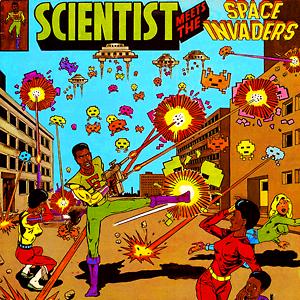
4. "Quasar" - Scientist: Dub producer Scientist was at his peak with a series of elaborately titled album, my favorite being Scientist Rids the World of the Evil Curse of the Vampire. This comes from 1981's Scientist Meets the Space Invaders.
5. "Small Talk" - Sly Stone: Some days the baby annoys me; on others, we're good.
6. "Buddy X" - Neneh Cherry: One things leads to another.
7. "Haunted Jukebox" - Saint Etienne: I'm not sure why I've been so curious about a new Saint Etienne album since they were never more than a casual affection in the past. This has the charming unassuming quality that I always liked about them.
8. "Girl Like Me" - Ladyhawke: At The Guardian, Matthew Horton wondered what 2009's class of '80s-centric synth-pop musicians were going to do for an encore. Since Ladyhawke lasted for one song for me - "Magic" is in my iTunes, though I can't remember it - I was intrigued by the hopes someone had for her.
9. "Monster Mouth" - the Popinjays: All this female-centric UK pop brought this to mind. I wish their Tales from the Urban Prairie was on Spotify.
10. "Came Out a Lady" - Rubblebucket: This regrettably named Brooklyn-based band plays Tipitina's on Tuesday night.
11. "Good Old Desk" - Nilsson: Nilsson's dissolute legend and often-woozy catalogue can overshadow how talented he was at his peak. This perfectly odd track from Aerial Pandemonium Ballet is a great reminder.
12. "Fading Into Obscurity" - Sloan: From the aptly titled Never Hear the End of It. I've never failed to reach the end of an album I enjoyed more, but there are so many ideas in each song that I can't process that much music. This is a great example - check how many songs has the band crammed into 4:10.
13. "Solid Gold" - Keith Moon: Nilsson made me think of this. Tony Fletcher's Moon: The Life and Death of a Rock Legend is great for its depiction of Moon, Harry Nilsson and John Lennon drunk and adrift in Los Angeles. They were among the first wave of musicians to discover how remarkably much money could be made through rock 'n' roll, and they were on the cutting edge of the corresponding indulgences. Rather than sounding sordid, their lives seemed pointless at that juncture.
14. "What the Hell I Got" - the Blue Shadows: I hoped to find this by Montreal's Michel Pagliaro, but Spotify says "non." Instead, I'll go with the rockabilly-ish version by Vancouver's Blue Shadows (which included . This is how the songs has generally been covered.
15. "Fiya Wata" - Edward Sharpe and the Magnetic Zeros: From the new Here. I'm still waiting to here it as rousing as their set was when the Big Easy Express visited New Orleans in 2011, but I didn't hear that kind of excitement on the previous album either, so maybe it's a live thing.
16. "O.F.Y.C. Showcase" - The Fall: Another iPod special. I put Your Future Our Clutter on my iPod without hearing it, and each time it comes on, I'm ecstatic. The world almost always needs a four-to-five minute-long interruption by Mark E. Smith.
17. "5 a.m. in the Morning" - Hannibal Buress: Comedian Hannibal Buress plays the New Movement Theater Wednesday night, and this is the first time I've been really excited to see a comedian in a while. He's got a distinctive, authentic voice that anatomizes his interactions with the world in scientific detail.
(Coming soon: MySpiltMilk.com)
most of us don't like the notion of random, even when the choices presented to us are culled from our own collections. It's like if there were a robot randomly selecting what we wear each day. Sure, it's our own closet and our own clothing, but we don't want to wear sweaters on 80-degree days, or to put on some magenta silk top that only looked good in the dressing room. With music, it boils down to mood and context, as well.
I've never understood looking to your iPod to know your mood, though I'm always fascinated by Scott Tennant's efforts at Pretty Goes with Pretty to coerce iTunes into giving him what he wants through a process of grading and categorizing that exhausts me to think about.
1. "East of the River Nile" - Augustus Pablo: Maybe the funkiest track of the dub master's career.
2. "Bob Hope Takes Risks" - Rip, Rig & Panic: This post-punk band led by the Pop Group's Mark Stewart features a young Neneh Cherry on vocals. I'm curious about her upcoming collaboration with The Thing on avante-garde jazz and rock covers including Suicide's "Dream Baby Dream" and the Stooges' "Dirt."
3. "You Can't Beat Two People in Love" - James Brown feat. Lyn Collins: I'd dumped this James Brown comp on my iPod without listening to it, and I hadn't heard this track before it came up. Until I checked the title, I thought Collins was singing, "You can't be two people in love," which made the song my new favorite anti-schizophrenia anthem.
4. "Quasar" - Scientist: Dub producer Scientist was at his peak with a series of elaborately titled album, my favorite being Scientist Rids the World of the Evil Curse of the Vampire. This comes from 1981's Scientist Meets the Space Invaders.
5. "Small Talk" - Sly Stone: Some days the baby annoys me; on others, we're good.
6. "Buddy X" - Neneh Cherry: One things leads to another.
7. "Haunted Jukebox" - Saint Etienne: I'm not sure why I've been so curious about a new Saint Etienne album since they were never more than a casual affection in the past. This has the charming unassuming quality that I always liked about them.
8. "Girl Like Me" - Ladyhawke: At The Guardian, Matthew Horton wondered what 2009's class of '80s-centric synth-pop musicians were going to do for an encore. Since Ladyhawke lasted for one song for me - "Magic" is in my iTunes, though I can't remember it - I was intrigued by the hopes someone had for her.
9. "Monster Mouth" - the Popinjays: All this female-centric UK pop brought this to mind. I wish their Tales from the Urban Prairie was on Spotify.
10. "Came Out a Lady" - Rubblebucket: This regrettably named Brooklyn-based band plays Tipitina's on Tuesday night.
11. "Good Old Desk" - Nilsson: Nilsson's dissolute legend and often-woozy catalogue can overshadow how talented he was at his peak. This perfectly odd track from Aerial Pandemonium Ballet is a great reminder.
12. "Fading Into Obscurity" - Sloan: From the aptly titled Never Hear the End of It. I've never failed to reach the end of an album I enjoyed more, but there are so many ideas in each song that I can't process that much music. This is a great example - check how many songs has the band crammed into 4:10.
13. "Solid Gold" - Keith Moon: Nilsson made me think of this. Tony Fletcher's Moon: The Life and Death of a Rock Legend is great for its depiction of Moon, Harry Nilsson and John Lennon drunk and adrift in Los Angeles. They were among the first wave of musicians to discover how remarkably much money could be made through rock 'n' roll, and they were on the cutting edge of the corresponding indulgences. Rather than sounding sordid, their lives seemed pointless at that juncture.
14. "What the Hell I Got" - the Blue Shadows: I hoped to find this by Montreal's Michel Pagliaro, but Spotify says "non." Instead, I'll go with the rockabilly-ish version by Vancouver's Blue Shadows (which included . This is how the songs has generally been covered.
15. "Fiya Wata" - Edward Sharpe and the Magnetic Zeros: From the new Here. I'm still waiting to here it as rousing as their set was when the Big Easy Express visited New Orleans in 2011, but I didn't hear that kind of excitement on the previous album either, so maybe it's a live thing.
16. "O.F.Y.C. Showcase" - The Fall: Another iPod special. I put Your Future Our Clutter on my iPod without hearing it, and each time it comes on, I'm ecstatic. The world almost always needs a four-to-five minute-long interruption by Mark E. Smith.
17. "5 a.m. in the Morning" - Hannibal Buress: Comedian Hannibal Buress plays the New Movement Theater Wednesday night, and this is the first time I've been really excited to see a comedian in a while. He's got a distinctive, authentic voice that anatomizes his interactions with the world in scientific detail.
(Coming soon: MySpiltMilk.com)
Saturday, June 2, 2012
Down in the Treme: Maxim Runs a Wire Oral History
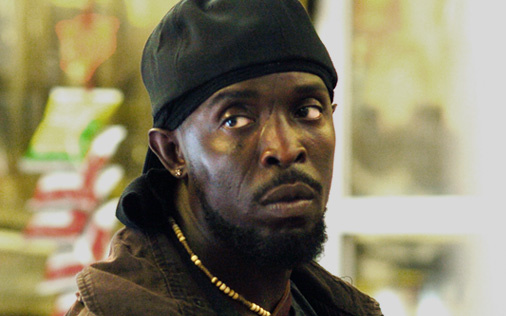
Not Treme news per se - The Wire news today. Maxim spaces out the photos of bikini girls this issue with an oral history of The Wire, including debates over the hows and whens of characters' deaths. Michael K. Williams talks about getting the news of Omar's fate:
I was hurt. But it wasn’t like I was surprised. I was glad that Marlo and Snoop and Chris never got to touch him. They couldn’t catch him slippin’ like that.

I was hurt. But it wasn’t like I was surprised. I was glad that Marlo and Snoop and Chris never got to touch him. They couldn’t catch him slippin’ like that.
Friday, June 1, 2012
Dave Alvin: Alvin on Allen and the Road

"I hope so?"
Dave Alvin has just had a road first after more than 30 years of touring. He stepped out of a Cracker Barrel outside Beaumont, Texas to talk on the phone, and he sat on a rock. Minutes into the interview, he's startled to see his boots are covered in ants and that the rock is next to an anthill. "This has never happened before."
Alvin plays the Rock 'n' Bowl Saturday night, and he has played the blues and rock 'n' roll since he was a young teen in Downey, California. He started touring California, the Southwest, Texas and Louisiana in 1980 with the Blasters.
"We played Tipitina's as a four-piece," he says. At that time, they were Alvin, his brother Phil on vocals, bassist John Bazz and drummer Bill Bateman. Their Slash Records' debut album in 1981 introduced them to the world and a larger lineup that included pianist Gene Taylor and the saxophone duo of Steve Berlin and J&M Studios stalwart Lee Allen.
"It was primarily a rockabilly crowd," Alvin says of his first night at Tip's. "We had a party afterward that got pretty wild."
The Alvins met Allen through Phil Alvin's manager, a West Coast jump blues singer named Mary Franklin. Her circle of friends included T-Bone Walker, Allen and a number of other Los Angeles-based R&B and blues men. "They were great teachers, and they wanted to teach somebody."
The Alvin brothers were always blues and R&B obsessives, and once they knew Allen, they started digging up everything they could find that he played on. "We could tell instantly," Alvin says. "He had a melodic sense that was clearly Lee Allen. They first bumped into South Louisiana's eccentricity when they quizzed him about a single they'd found - "Rich Woman" by "L'il Millay" - as they said it.
"We figured you had to pronounce it French," Alvin says. He remembers Allen's response:
"L'il Millay? Nope. Never made a record with L'il Millay."
Dave and Phil insisted it had to be him on the single, but Allen couldn't remember it. After about five minutes, he said, "Oh, you mean L'il Millet. Yeah, that was me."
Alvin credits Allen for having eclectic tastes, and he showed the brothers how music is connected. Once he was in the band, they wrote the Longhair-flavored "Hollywood Bed" as a showpiece for Allen. He also influenced how Alvin thinks about soloing on the guitar. "When Lee played a solo, you always knew it was Lee, and there was a melodic aspect to it," he says. "I always approached soloing less like a guitar player and more like Lee Allen on sax. The Blasters stuff was geared around a short solo - make it melodic and get to the point. These days I'll meander, looking for things while I'm playing a lead, but you always want to get to the point. It may be a short point or a long point, but you want to get there."
Most of the lessons they learned from Allen were bigger picture things. "He hipped us to things other younger bands had never heard of, like publishing," Alvin says. "An overall how to view the record industry. Perhaps a little cynically or guardedly, but those are good things to know when you're starting out." According to Alvin, Allen felt burned that his solos and the work of the bands played such a major role in the success of many New Orleans R&B hits, but they didn't share in the money. "But he kept playing, and that was another lesson we learned. You just keep playing. Bitterness wasn't his personality."
As a rockabilly and rockin' blues band out of Downey, the Blasters had a tough time getting a foothold in Los Angeles at first. "We couldn't get gigs in Hollywood because we weren't from Hollywood," he says. "We didn't know the people in Hollywood. We'd go around the southeast side of L.A. trying to get gigs and audition in bars and they,d say, 'You don't sound like Cheap Trick. The kids love Cheap Trick.' I like Cheap Trick, but it would have been ridiculous for us to try to sound like Cheap Trick." By the time of the release of the band's self-titled first album on Slash, they'd become big enough to play four nights a week in Los Angeles, and in a two-week stretch opened for Asleep at the Wheel, Queen, the Cramps and the Go-Gos.
"It was pretty cool," Alvin says. "We formed in springtime of 1979 and that came out in early 1981, and we all went from day jobs to having a record in Time Magazine's top 10 records of the year. That post-first album rush, that's the closest we got to being the Beatles."
Today, Alvin is an Americana icon. He has approached American roots music with stoic grace and a poet's consciousness (He has written one book of poetry, Any Rough Times Are Behind You Now). On 1994's King of California, he slowed down the Blasters' "Border Radio" to draw attention to the heartbreak that got swept up in the energetic rush of the original. His deep voice is an apt instrument to document the loss that he's experienced over the years, but he does so without forcing or belaboring the drama. The title track from 2004's Ashgrove celebrates a blues bar that was important to his development, but it could also serve as a statement of purpose: "I'm going to play the blues tonight / because that's what I do."
On Eleven Eleven, Alvin's electric guitar returns to the forefront. His preference for the acoustic guitar on recent albums was largely a practical decision. "My voice tends to work better in an acoustic context," he says. "I'm not a singer like my brother is who can overpower a whole band with the majesty of his throat." The album has more in common with the rocking Ashgrove than 2009's Dave Alvin and the Guilty Women, and it closes on a charming note with "Two Lucky Bums," a duet with the late Chris Gaffney. Gaffney was a songwriter and singer on his own as well as a member of Alvin's road band and half of the Hacienda Brothers with Dave Gonzales.
"We thought if we ever make millions of dollars - so immediately we're entering fantasyland here - we were going to buy this little ghost town in New Mexico called Cuervo," Alvin says. Their ideas for the ghost town became a regular topic for discussion on long drives between gigs, and those plans grew more and more absurd. At one point, the decided they should make a Bob Hope and Big Crosby-like movie, The Road to Cuervo.
"If we can't do all that, at least we should make a duet record, a thematic record of us buying this ghost town and fixing it up," Alvin says. They finished one song, "Two Lucky Bums" before Gaffney passed away from cancer in 2008. "I thought, 'This is how the record ends,'"
Eleven Eleven also includes an unexpected duet with Alvin's brother Phil. The two have had a famously strained relationship, so much so that Dave couldn't get escape talking about it. One night he was playing a club that had no bathroom in the dressing room. "Ten or 15 minutes before I went onstage, I went to the bathroom," he says. "I'm standing there and a guy comes up and says, 'Hey Dave, what's your brother up to?' After the show was over and people had had a chance to leave, he went back to the bathroom. "I'm standing in front of a urinal and another guy comes up to me and says, 'Hey Dave, what's up with your brother?'" Later that night, he wrote the first draft of the good-natured romp, "What's Up with Your Brother?"
"You grab songs wherever you can," he says, even in the john and perhaps on an anthill outside of Beaumont.
Thursday, May 31, 2012
Dario Robleto Applies Rock 'n' Roll Thinking at NOMA
"It’s not fair to compare Dario Robleto’s 'Prelives of the Blues' show to a butterfly collection, but the parallels are inescapable — and inexplicable," Gambit's Eric Bookhardt wrote in his review of the show now on display at the New Orleans Museum of Art. "Most of the 24 precisely ordered and taxonomically arranged sculptures and works on paper are said to be inspired by blues, jazz and rock ’n’ roll. They take many forms.... What does any of this have to do with the blues or any other soulful music? Frankly, not much."
In his review, Bookhardt brings very traditional notions of rock 'n' roll to his examination of Robleto's work, assuming that rock 'n' roll - or good rock 'n' roll - is simply about blues and soul, an assumption that can't stand much scrutiny. He's right that rock 'n' roll is unquestionably a central part of the show, and the work is disarmingly pristine, but its more accurate to think of rock 'n' roll as one of Robleto's materials and not the theme.
The Houston-based Robleto will deliver a talk Friday night at 6 at NOMA as part of its Where Y'art series. Here's a preview:
"The Prelives of the Blues" was inspired by New Orleans. How do we see that in the show?
Survival's an overarching theme that I've spent my whole career exploring in different ways. Different topics from war to things like the paranormal community and the way people don't want to give up on losing someone. The list could go on and on. My fascination with DJ culture over the years; I've always understood it as a form of survival, especially when you factor in the history of sampling in hip-hop. I'm drawn to that big topic and it filters down to the ways people have solved that basic problem of survival. The city is immersed in that and has a very unique story to tell about that.
Most of the works we picked were heavily music-influenced. Most of the core works - the hips, the hands - they're about being born into it. How do we become who we are based on our past, our parents' past, our lineage? I thought that story was very relevant to New Orleans as well - the good and the bad that comes with that. I like the idea that we're connected at some fundamental level to the past through music.

The piece was about me grappling with my parents' generation and their understanding of rock 'n' roll at its inception, which I'm completely fascinated with. The idea that the devil actually found his way into a rhythm fascinates me so much, and I was always interested in how that made a generation feel personally and sexually. The way that moving their bodies became dirty. Because the piece was about the birth of me - and I would argue many of us are here because of rock 'n' roll in a very direct way, putting people in the right mood at the right moment - the piece is meant to look and feel dirty and raw. There's nothing romantic about being boned on the floor with a spotlight on them. It's meant to reveal the dirtiness. It's not a bad thing. A lot of life was made from it.
Those are the sculptural decisions, to reduce that basic act to two hips moving in a certain way to create new life - to bone on bone - to reflect how I felt about that music. I'm always envious because I want my musical decisions to be that radical. I want there to be that much riding on what I buy.
I find it fascinating to think about my parents' music for different reasons. My mom was in Memphis and saw Elvis play county fairs, but one thing that interests me is how my parents - and I suspect most adults of that generation - put rock 'n' roll aside when they got jobs and started families. I realized that baby boomers are probably the first generation that never felt the obligation to put their music down when they entered their adult lives, and I wonder if that sense that it can be an ongoing part of their lives took some of the radicalness out of music?
I think so. It's always hard to go back if you weren't there, but the evidence suggests what you just said - that it was truly radical. It blows my mind that someone could think the devil had found its way into a disc of vinyl and could change a whole generation.
You make me think of one other point that is in that piece, and that's my fascination with aging rock stars, the Mick Jaggers and Keith Richards of the world. How one body can absorb that much punishment over a period of time on an actual physical level. I'm fascinated with them as human specimens. Their bodies encompasses a unique history. They seem like true anomalies. I don't know how to explain how they've done it physically, so the piece is kind of a nod to the elements of that generation, when it gets down to broken bones, which is becoming more of a reality for many of them. The difference between the power of their youth as rock stars still perform today, but their bodies don't hold up the same way.
I was thinking as you talked about the piece being dirty that even on the floor, I didn't see it as dirty. In general, your work has a very finished, very pristine nature. I see the grittiness and the grain when I see the bones, but I never would have thought of it as "dirty." Do you see the pristine quality in your work, and if so, where does it come from?
I certainly have this other side of me that is rooted in the language of science and putting something under a microscope, and the way we're forced to look at something when you isolate it. I would also say with the hips piece and the hands piece that my attempts to make them read as completely authentic for the trompe l'oeil effect - I think because I work so hard to make them look right, they come across as pristine. There's a weird tension because to make them look authentically dirty, they look pristine again because of the way that they're made.
A lot of that can be installation. The hips change from venue to venue. Ideally, I like them to be on a concrete floor with much harsher light. In this setting, they're not as dirty as they have looked in the past. That's a unique piece. My other work gets more pristine too, but my cut paper work - if you look closely, the hand-madeness is very clear. It's not about perfection; it's about as good as I can possibly do with an X-Acto knife and paper. There's a messiness about them that I like.
For me, one of the interesting things about your show is how rock 'n' roll is an integral part of your work, but when people walk through the show, they see unassuming, domestic items - a chest of drawers, spools of thread in Mason jars, nothing that looks like rock 'n' roll. What's the thought behind seemingly coding rock 'n' roll into such domestic items?
There's two ways to answer that. There's my bigger philosophy about sampling, and then in this show the domestic pieces were highlighted because the family lineage aspect, being attached to the past.
My earliest artistic efforts were in DJ culture, and the breakthrough I had in my thinking was that I may never be a great DJ, but maybe I could be an interesting object maker. What I wanted to do was utilize the skills of the DJ and the philosophy behind them and translate them to the sculpture world. With any good DJ, there's the basic skill set you have - scratching, beat matching, or song selection, which is crucial - but for me the artistry of a great DJ has been what they turned it into by clashing them together, that there was a hidden universe within disparate songs. With the right tweaking, you could blossom a whole new world out of it. Patsy Cline's voice is a great sculptural problem, in fact. Could I find a physical way to embody both the inherent strength of her voice and persona, and at the same time account for the equally inherent fragility and tenderness she conveyed so well? A thread is both a source of repair and strength when used the right way, but also easily snapped and broken. I used her 45 rpm record of "I Fall to Pieces" and I slowly with an X-acto knife unwound the record, going around the outer rim. I kept going around and around until I had made this incredibly long thread, which I then spooled. The creative act there is to find out how I can enhance the reading of her story by turning her voice into a very fragile piece of thread? Over the years I found more and more complex ways to find these sculptural and visual things that are hidden within the music on a physical level, but it's still rooted in DJ'ing. I spent a lot of time thinking about what songs to work with and what to turn them into to enrich the whole experience.
One of the things that I took away from those pieces is a theme that has fascinated me recently, which is how omnipresent rock 'n' roll is. I've talked to young Cajun musicians about the influence of rock 'n' roll, and no matter how dedicated they are to the music and culture's traditions, they can't entirely escape rock 'n' roll's influence in 2012. I saw that in these domestic pieces as well - the idea that it's so omnipresent that it has permeated even the most mundane of objects.
That's a great reading. I love that. I agree with you; it's everywhere around me.
Because I'm sensitive to things and objects, it's natural for me to figure out how to turn the audio one into a physical one. When you think of dancing and how important it is in relation to rock 'n' roll, we all understand the music physically. It's not that foreign territory to have a visceral experience to rock 'n' roll. I hope I took it to a new level. What if you really have to deal with Patsy Cline in this unexpected way, like holding your shirt together or sewing a button on your shirt? It's that intertwined into my daily experience.
One thought that came into focus for me when seeing your show upstairs from the Thornton Dial show at NOMA was how important the text panel is. In both cases, something essential to the work is missed if you don't read the list of material. I've heard from people who think that if the piece needs the text panel, it must indicate some deficiency in the art. How do you resolve that tension?
That's a big one. I've spent years having that fight. The best way I can sum it up is that my earliest experiences were with music as I think yours were too, and if you break down that experience for me as it was for many of us, its an audible experience, it's a visual experience, it's a text-based experience through the liner notes. The lyric sheet, who produced it, what kind of equipment did they use, or the biography of the artist. Of course you can appreciate Billie Holiday, but god it sure helps to know her story when you really listen to those words. It was a tactile experience. The smell of the record. My experiences were always multi-dimensional, so when I became an artist, it was instinctual that what I created should have a similar experience.
In the art world, it's more complicated because - this is my opinion here - there's an uncritiqued or untested bias that the art experience should be this pure, unadulterated visual experience. Certainly you can have that, and a lot of our history is written on that point, but it's not an experience I understand, especially in 2012 in a world defined by multi-dimensional experiences. Everybody assumes their iPad will give them every possible sensory experience, or DJ culture, I'd even argue, it's hard-wired into that generation's thinking that the audible level is only one level of the true enjoyment of it. The music fan has one thing, but as I moved over to the art world, I realized that there's this art historical perspective and I simply don't buy it that the work can't have this symbiotic relationship with the language the way good liner notes do to a song.
The bottom line is that it still has to be an interesting object, and I believe I'm making compelling objects that, if you didn't have access to my text or the title, you'd still get something out of it. My attitude is that it's there if you want it. I think most music fans understand that attitude that if you want to dig in a little more, there's another layer, and another and another and another. That's valuing the role of the fans, which is a huge part of my thinking. I even have a theory of that, and the basis of it is that the fan will go further, so as an artist, I have to make sure there's something there to go further with.
As I thought about this issue, the connection that I made was how often pop songs seem innocuous on the surface, but when you hear the lyrics and think about what's really being said, you realize that there's an entire subversive dimension. I wondered if you were mirroring the subversive nature of rock 'n' roll.
In the two experiences of art that we're talking about - visual arts and music - on the music side, we're hard-wired to understand that language is on equal footing with the sound playing off each other in subversive ways. In the visual arts it doesn't quite work the same way for reasons I don't accept. I think often people struggle with my work because they come to it assuming the visual experience has to be this way and not reflecting on the fact that most of all of us have wonderful art experiences in life with language and images and sound all coming together. I'm drawing off a tradition that is not art historical to make my objects, which is part of the tension.
Your email address references the Smiths. Have you done Smiths-related art?
No, but Morrissey and Marr as an art duo, it doesn't get much higher for me. I remember so vividly getting home with a new Smiths album and by their last album, knowing instinctually I would go grab my dictionary and my encyclopedia off the shelf as I walked to the record player because I was guaranteed that my vocabulary would increase or there would be a reference to Caligula that I didn't know and had better figure out so I would understand the song. For me, those two were the ones who gave me this full art experience of language and sound and those beautiful album designs all coming together for me in the most perfect way. I've never used the Smiths album or a Morrissey album in my art, but what I learned from them is all over what I do.
[Full disclosure: I wrote an essay for NOMA's catalogue for "Prelives of the Blues."]
Dario Robleto will speak at NOMA Friday night at 6 p.m. "Prelives of the Blues" will be on display until September 16.
(Coming soon: MySpiltMilk.com)
(Coming soon: MySpiltMilk.com)
Subscribe to:
Posts (Atom)

 Posts
Posts

